Most families do not lose their photographs all at once.
They disappear slowly.
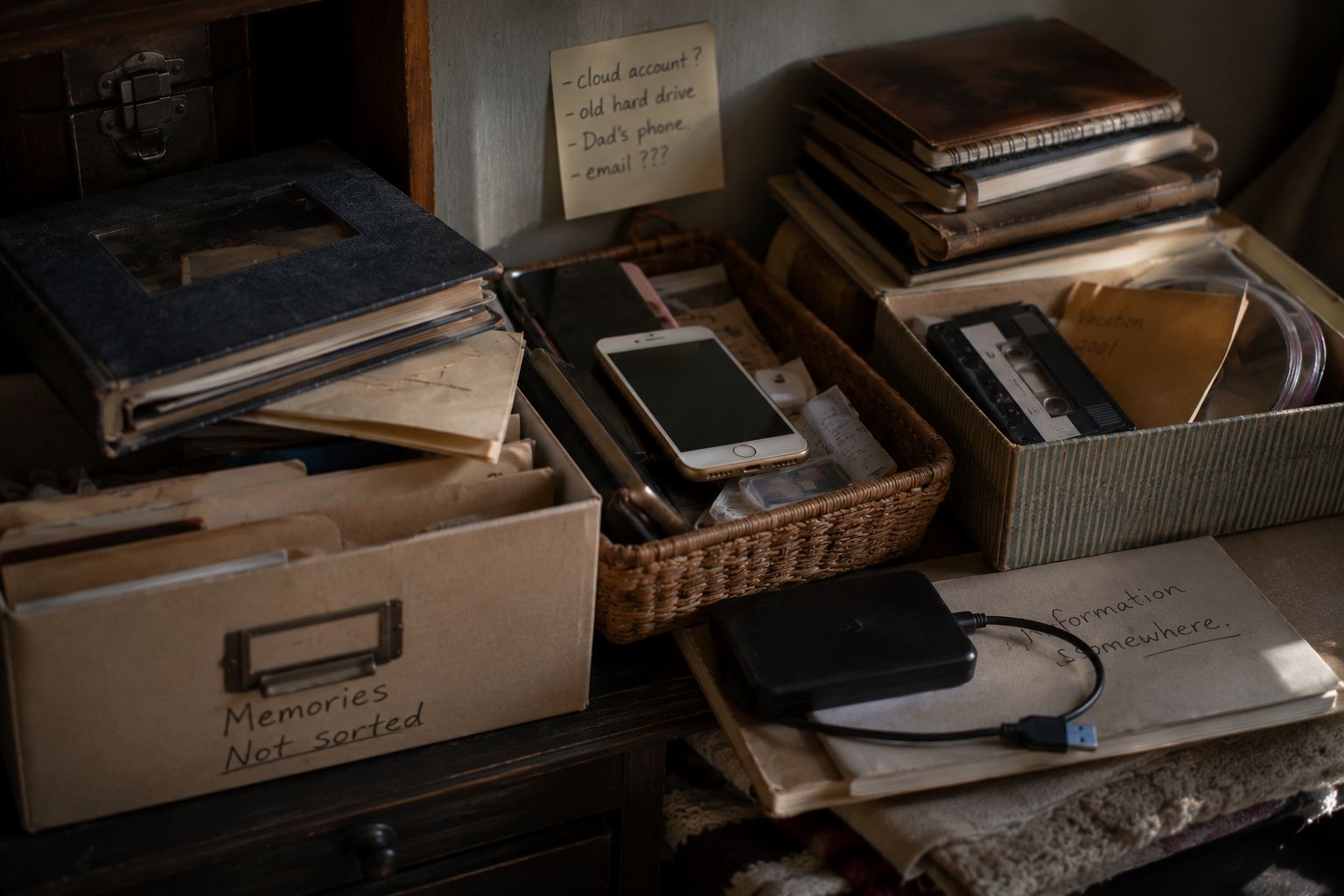
A box left in a basement. An old phone that no longer turns on. A social media account nobody can access. A relative who passes away without labeling albums.
Over time, entire pieces of family history can quietly vanish.
Photographs are more fragile than people realize
Many families assume digital photos are permanent.
But photographs today often live across:
- old phones
- cloud accounts
- external hard drives
- social media platforms
- text message threads
- forgotten email accounts
When devices break or passwords are lost, memories can disappear with them.
Printed photographs also face risk from:
- moisture
- sunlight
- moving homes
- poor storage
- accidental disposal
What feels permanent today may not remain accessible years from now.
One generation often holds the context
Sometimes photographs survive, but the stories behind them do not.
A future generation may not know:
- who is in a photograph
- where it was taken
- what family relationship existed
- why the moment mattered
Without context, important family memories can slowly become anonymous.
Loss often happens after a death
Many families only begin organizing photographs after losing someone.
That is often when people realize:
- albums are scattered
- phones are locked
- files were never backed up
- nobody knows where certain memories are stored
Moments that felt easy to access suddenly become difficult to recover.
Preserving memories does not need to be complicated
Families do not need perfect systems to begin preserving photographs.
Even small steps can matter:
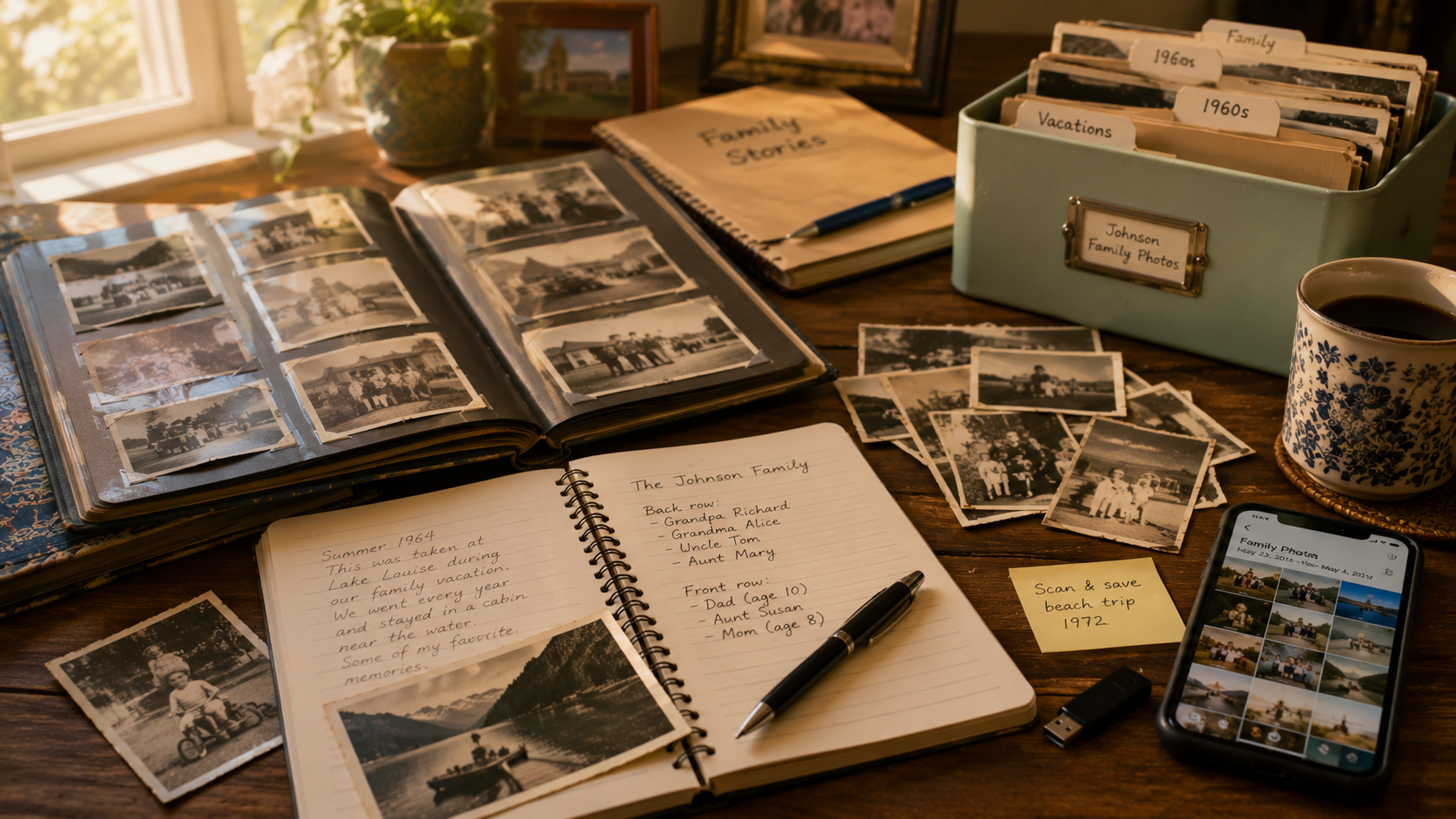
- scanning printed photos
- labeling folders
- saving backups
- writing names and dates
- organizing albums by family member
- storing memories in one shared place
The most important step is starting before memories disappear further.
Ordinary photographs become more meaningful with time
The photos people value most are not always the most polished ones.
Often they are:
- casual family gatherings
- blurry pictures from childhood
- ordinary holidays
- quiet moments at home
- everyday life captured unintentionally
As years pass, ordinary photographs often become emotional records of connection and presence.
Preserving family history for future generations
Future generations may never meet many of the people in older photographs.
But preserved images can still help them feel connected to:
- family history
- traditions
- culture
- identity
- the people who came before them
A photograph can become more than an image.
It can become proof that someone was here and mattered to the people who loved them.
Memory fades faster than people expect
Most lost photographs are not intentionally discarded.
They are simply forgotten over time.
Preserving memories is not only about storage.
It is about protecting pieces of family history before they quietly disappear.